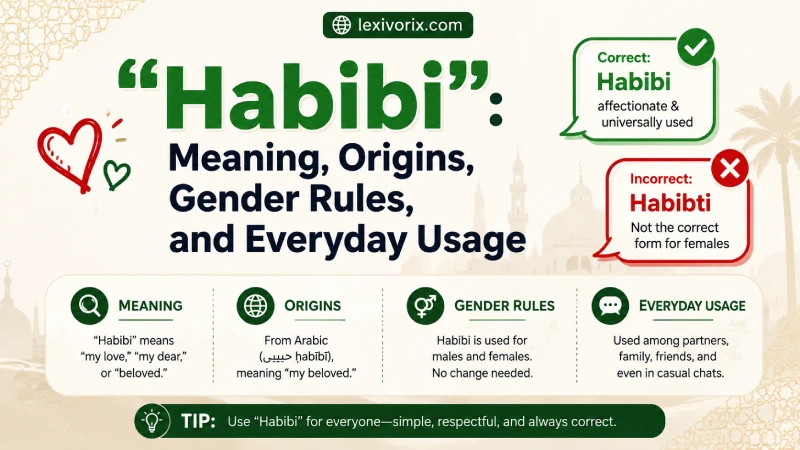
Hearing the word habibi in a song, video, text message, or conversation often leaves non-Arabic speakers wondering about its exact meaning, origin, and social rules. As one of the most recognizable loanwords from Arabic used globally today, understanding what habibi means opens the door to warmer, more effective cross-cultural communication.
This comprehensive guide breaks down the habibi meaning in English, its linguistic origin, gender rules, modern text slang, translations in other languages, and how to use it appropriately in daily life.
1. What Does Habibi Mean? Definition and Plain English Meaning
When people search for what is habibi or what does habibi mean, the simplest answer begins with its literal Arabic definition.
At its core, habibi (written in Arabic as حبيبي) translates directly to “my love” or “my beloved.”
It is a traditional Arabic term of endearment used to show affection, closeness, and warmth. However, its actual usage in modern English and global slang expands far beyond strictly romantic love. Depending on who is speaking, where they are, and the tone of voice used, habibi can mean:
- “My love” or “My darling” (between romantic partners)
- “My dear” or “Sweetheart” (toward children or family members)
- “Bro,” “Dude,” or “Mate” (between male friends)
- “My friend” or “Sir” (as a polite, warm greeting from shopkeepers or street vendors)
Arabic Root: H-B-B (Love) ➔ Habib (Beloved) + -i (My) = Habibi ("My Beloved")
2. Linguistic Origin: What Language Is Habibi?
If you have ever asked is habibi Arabic or what language is habibi, the answer is 100% Arabic.
The word originates from Classical Arabic and is universally used across all modern Arabic dialects—including Levantine, Egyptian, Gulf (Khaleeji), North African (Maghrebi), and Iraqi Arabic.
The Root Word: Habib and Habeeb
To understand the full meaning of habibi, it helps to look at the base noun: habib (also spelled habeeb).
- Habib / Habeeb meaning: The noun habib (حبيب) means “beloved,” “lover,” or “dear person.” It is also widely used as a proper masculine first name throughout the Middle East and South Asia (e.g., Khabib Nurmagomedov or Habib Koité).
- The “-i” Suffix: In Arabic grammar, adding the vowel suffix “-i” to the end of a noun creates the first-person possessive form meaning “my.”
Therefore, taking habib (“beloved”) and appending “-i” gives you habibi—literally meaning “my beloved” or “my dear.”
Base Form: Habib / Habeeb = Beloved
Possessive Form: Habib + i = Habibi (My Beloved)
3. Spelling Variations and Common Misspellings
Because habibi is a transliteration from the Arabic alphabet (حبيبي) into the Latin alphabet, people spell it in various ways online. You may encounter several common spellings and variations:
- Habibi: The standard, most widely accepted English spelling.
- Habbibi: A common double-“b” misspelling reflecting how the middle consonant sound is emphasized.
- Abibi: An informal phonetic misspelling where the initial soft “H” sound is dropped by non-native speakers.
- Habibish: A modern slang derivative or playful Internet slang blend (often used jokingly to describe someone acting affectionate or adopting Middle Eastern stylistic traits).
Despite minor spelling differences, all these terms refer back to the core concept of affection and personal warmth.
4. Habibi vs. Habibti: Understanding Gender Rules and Part of Speech
In English grammar, habibi functions as a vocative noun (a noun used to address someone directly). Because Arabic is a gendered language, terms of endearment change based on the gender of the person you are speaking to.
The Male Form: Habibi
Habibi is strictly masculine. You use it when speaking to:
- A man or young boy
- A male friend, brother, or father
- A husband, boyfriend, or male romantic partner
The Female Form: Habibti (or Habibaty)
The feminine counterpart to habibi is habibti (حبيبتي), sometimes spelled habibaty or habibah. It is formed by inserting the feminine Arabic marker “t” before the possessive suffix “-i”. You use habibti when speaking to:
- A woman or young girl
- A female friend, sister, or mother
- A wife, girlfriend, or female romantic partner
Gender Rule Summary:
• Address a Male ➔ Habibi ("My dear" - masculine)
• Address a Female ➔ Habibti ("My dear" - feminine)
Addressing Groups: Habibai / Habayeb
When addressing a group of beloved people or friends (regardless of gender), speakers often use the plural term habayeb (حبايب) or habayeb qalbi (“beloveds of my heart”).
5. What Does Habibi Mean in Different Contexts?
Context determines the exact feeling behind the word. Here is how the term functions across various settings:
                  ┌─────────────► Romantic ("My sweetheart / My love")
                  │
                  ├─────────────► Platonic Friends ("Bro / Mate / Dude")
CONTEXTS OF       │
   HABIBI         ├─────────────► Family ("My dear child / My dear parent")
                  │
                  └─────────────► Commercial ("My valued customer / Friend")
A. Romantic Context
When spoken between lovers or spouses, habibi conveys deep emotional intimacy, equivalent to saying “my love,” “my darling,” or “my sweetheart” in English.
B. What Does Habibi Mean to a Guy? (Platonic Friendship)
Women and men frequently ask: what does habibi mean to a guy?
When a guy calls another guy habibi, it is almost always purely platonic. It functions identically to saying:
- “Thanks, bro!”
- “What’s up, man?”
- “Catch you later, dude.”
It signals brotherhood, respect, and casual warmth. If a guy calls a woman habibi (or more accurately, habibti), it could indicate either friendly warmth or romantic interest depending on their relationship dynamic, body language, and tone.
C. Familial Context
Parents frequently call their children habibi (for sons) and habibti (for daughters). In this setting, it carries a gentle, protective tenderness equivalent to “my darling child.”
D. Commercial and Everyday Hospitality
In many Arab cultures, hospitality is paramount. Taxi drivers, market vendors, barbers, and restaurant staff regularly call customers habibi. This does not mean they are in love with you; it is a polite, welcoming gesture meaning “my valued guest” or “my friend.”
6. Popular Phrases Containing “Habibi”
The word frequently pairs with other common Arabic words to form memorable phrases heard in pop culture, music, and travel.
Common Phrases:
• Ya Habibi ➔ "O my love" / "Oh, my friend"
• Yalla Habibi ➔ "Let's go, my friend!" / "Come on, darling!"
• Habibi Come to Dubai ➔ Viral slogan for travel and luxury lifestyle
1. Ya Habibi Meaning
Ya (يا) is a direct calling particle in Arabic, equivalent to “O” or “Hey.” Therefore, ya habibi meaning translates to “O my love” or “Hey my friend.” It is used to grab someone’s attention affectionately before speaking.
2. Yalla Habibi Meaning
Yalla (يلا) means “let’s go,” “hurry up,” or “come on.” Combining them into yalla habibi yields “Let’s go, my friend!” or “Come on, darling!” You hear this phrase constantly when people are rushing out the door, encouraging friends during sports, or starting a dance track.
3. “Habibi Come to Dubai”
This viral internet meme and music audio clip spread across TikTok, Instagram, and YouTube Shorts. It is used humorously or casually in tourism content to highlight luxury, travel, and warm hospitality in the United Arab Emirates.
7. Global Translations: Spanish, Hindi, and More
Because people worldwide search for translations in their native languages, here is how habibi translates into non-English languages:
Que Significa Habibi / Que Es Habibi (Spanish)
Spanish speakers frequently search que significa habibi or que es habibi.
- Meaning in Spanish: Mi amor, mi querido, mi vida, or mi amorcito.
- Casual Slang Equivalent: Hermano, compadre, or amigo.
Habibi Meaning in Hindi (हिंदी में मतलब)
South Asian language speakers often search for habibi meaning in hindi.
- Literal Meaning: मेरी जान (Meri Jaan – “My life/love”), प्रिय (Priya – “Beloved”), or प्यारे (Pyaare – “Dear one”).
- Casual Friend Equivalent: दोस्त (Dost) or यार (Yaar).
8. Cross-Language Comparison Table
To see how habibi compares across different global languages and relationship dynamics, refer to this breakdown:
| Language | Romantic Meaning (“My Love”) | Casual Friend Meaning (“Bro/Friend”) | Feminine Form (“My Dear” – Female) |
| Arabic | Habibi (حبيبي) | Habibi (حبيبي) | Habibti (حبيبتي) |
| English | My love / Darling | Bro / Dude / Man | My dear / Sweetheart |
| Spanish | Mi amor / Mi vida | Hermano / Compadre | Mi querida / Amiga |
| Hindi | मेरी जान (Meri Jaan) | यार (Yaar) / दोस्त (Dost) | मेरी प्यारी (Meri Pyaari) |
| French | Mon chéri | Mon pote / Frérot | Ma chérie |
9. How to Pronounce Habibi Correctly
Mastering the pronunciation of habibi is simple once you break it down phonetically:
Phonetic Guide: ha - BEE - bee
- ha: A soft, breathy “h” sound (similar to the “h” in “happy”).
- BEE: A stressed, long “ee” sound.
- bee: A soft, unstressed “bee” sound at the end.
Put together smoothly, it sounds like ha-BEE-bee, with the primary vocal stress placed right on the middle syllable.
10. How to Respond When Someone Calls You “Habibi”
If a friend, colleague, or shopkeeper calls you habibi, you might wonder how to reply. Here are the best natural responses:
Option A: Reply with “Habibi” Back
The simplest response is to echo the word back with a warm smile:
“Thanks, habibi!” or “Good to see you, habibi!”
Option B: Say Thank You in Arabic (Shukran)
Pairing a thank you with the word shows cultural appreciation:
“Shukran, habibi!” (Thank you, my friend!)
Option C: Use Standard English
You don’t have to speak Arabic to reply politely:
“Thanks, man!” or “Appreciate it, my friend!”
11. Dos and Don’ts: Social Etiquette and Context Rules
To avoid social blunders when using Arabic terms of endearment, keep these practical guidelines in mind:
| Recommended Usage (Do’s) | Unsuitable Usage (Don’ts) |
| Do use habibi for men/boys and habibti for women/girls. | Don’t address a woman as habibi (it sounds grammatically incorrect). |
| Do use it casually with close friends, classmates, and workout buddies. | Don’t use it in formal corporate job interviews or legal courtrooms. |
| Do smile and say shukran when a shopkeeper or driver calls you habibi. | Don’t assume a street vendor calling you habibi is flirting with you. |
| Do use it in warm, supportive text messages and group chats. | Don’t overuse it with strict authority figures like police officers or judges. |
12. Frequently Asked Questions (FAQ)
What does habibi mean in Arabic?
In Arabic, habibi literally means “my beloved” or “my love.” It comes from the root H-B-B (love) and the noun habib (beloved) combined with the possessive suffix -i (my).
What does habibi mean in text messages?
In text slang, habibi is used as a warm, informal sign-off or greeting. Friends use it like “bro,” “dude,” or “bestie,” often accompanied by heart or smiley emojis.
Is habibi a romantic word?
It can be, but it isn’t strictly romantic. While partners use it affectionately like “sweetheart,” friends and family use it daily in a completely non-romantic, platonic way.
What is the female equivalent of habibi?
The female equivalent is habibti (or habibaty), which means “my love” or “my dear” when addressing a female.
Can a girl call a guy habibi?
Yes. A girl can call a guy habibi whether he is her boyfriend, husband, brother, son, or close platonic friend.
What does habeeb or habib mean?
Habib (or habeeb) is the base noun meaning “beloved” or “dear person” without the possessive “my” attached at the end.
What is the difference between habibi and habibti?
Habibi is used when addressing males (masculine form), while habibti is used when addressing females (feminine form).
CONCLUSIONs
Understanding the habibi meaning reveals how a single term of endearment can bridge cultures, express affection, and build lasting friendships. Whether spoken affectionately to a partner, casually to a friend, or warmly to a guest, habibi embodies hospitality, love, and human connection across the globe.


