You might see “FR” in a text message, social media comment, or conversation with friends. Someone might write “That movie was amazing fr” or simply reply “FR!” to your message. If you have never seen this abbreviation, its meaning might not be obvious.
In everyday digital conversations, FR usually stands for “for real.” People use it to show agreement, emphasize a feeling, or confirm that they genuinely mean something. Its exact tone depends on the surrounding words and punctuation.
This short expression is common in informal online communication. Understanding it can help you follow conversations and respond naturally. However, it may not suit every situation, especially formal emails or school assignments.
This guide explains what FR means, how people use it, and what related expressions such as FRFR mean. You will also find practical examples, common mistakes, and answers to frequently asked questions.
Quick Answer
What does fr mean? FR usually means “for real” in text messages and online conversations. It can express agreement, sincerity, emphasis, or surprise, depending on the context.
For example, “That test was difficult fr” means “That test was genuinely difficult.”
TL;DR
- FR usually stands for “for real.”
- It can express agreement or sincerity.
- FR? often means “Really?” or “Are you serious?”
- FRFR adds extra emphasis.
- FR is informal and suits casual conversations.
- Use “seriously” or “genuinely” in formal writing.
What Does FR Mean in Text?
FR is an informal abbreviation for “for real.” People type it when they want to show that something is true, express agreement, or emphasize their feelings.
The phrase “for real” already appears in everyday spoken English. FR is simply a shorter form suited to quick digital conversations.
Consider this example:
Friend 1: “This homework took me three hours.”
Friend 2: “FR, it was so long.”
The second friend agrees and emphasizes how time-consuming the homework felt.
FR can also appear at the end of a statement.
Example: “I’m ready for the weekend fr.”
This means the person genuinely feels ready for the weekend. The abbreviation adds emphasis without changing the sentence’s basic meaning.
What FR Means in Different Contexts
Although FR usually means “for real,” its conversational purpose can change. The words around it help readers understand the intended message.
Here are three common uses.
- Agreement: “That was the best episode.” — “FR!” The reply means “I agree.”
- Sincerity: “I really appreciate your help fr.” The sender wants to emphasize genuine appreciation.
- Surprise or disbelief: “You met the singer?” — “FR?” The question asks whether the news is true.
FR can also emphasize frustration, excitement, or disappointment. For example, “My bus is late again fr” stresses the speaker’s annoyance.
Remember that FR does not always communicate the same emotion. A question mark, an exclamation point, or the surrounding conversation can change its tone.
How to Use FR in a Sentence
FR works naturally in short messages, direct replies, and casual online discussions. You can place it at the beginning or end of a statement, or use it by itself.
At the beginning
“FR, that was a great performance.”
The speaker strongly agrees or emphasizes an opinion.
At the end
“I’m exhausted fr.”
The speaker emphasizes how tired they feel.
As a short reply
“FR!”
The sender agrees with the previous message.
As a question
“FR? You finished the whole book?”
The sender expresses surprise or asks for confirmation.
Use FR when the other person understands casual texting language. If the conversation is formal, writing out the full phrase is usually clearer.
FR Meaning on Snapchat and TikTok
On Snapchat and TikTok, FR generally carries the same meaning as in ordinary text messages: “for real.” Its purpose depends on whether someone is replying, commenting, or emphasizing a statement.
On Snapchat, a friend might send “You coming tonight fr?” This asks whether the plan is definite.
On TikTok, someone might comment “FR, this happens every time.” That response shows agreement with a video or another comment.
You may also encounter FR in Instagram comments, group chats, gaming conversations, and direct messages. The meaning usually stays the same across these settings.
The platform does not determine the exact emotion. Read the surrounding conversation to understand whether the person agrees, feels surprised, or is emphasizing a point.
What Does FRFR Mean?
FRFR stands for “for real, for real.” It repeats the abbreviation to add emphasis or make a statement sound more serious.
For example:
Message: “That was the best birthday ever frfr.”
Meaning: “That was genuinely the best birthday ever.”
FRFR can also show strong agreement.
Friend 1: “We definitely need another vacation.”
Friend 2: “FRFR!”
The second friend strongly agrees. The doubled form is still informal, so it fits casual conversations better than professional writing.
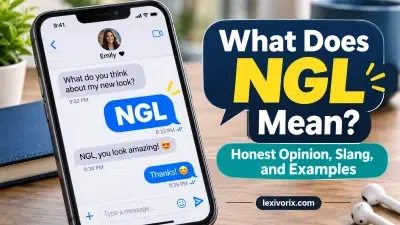
FR vs. No Cap and NGL
FR, no cap, and NGL are informal expressions related to honesty and sincerity. However, they are not completely interchangeable.
| Expression | Meaning | Typical Use |
|---|---|---|
| FR | For real | Agreement, sincerity, or emphasis |
| FRFR | For real, for real | Stronger emphasis |
| No cap | No lie; genuinely | Emphasizing that a claim is true |
| NGL | Not gonna lie | Introducing an honest opinion |
For example, “That was difficult fr” emphasizes the speaker’s experience. “That was difficult, no cap” stresses that the statement is truthful.
“NGL, I didn’t enjoy the movie” introduces an honest opinion. Each expression is informal, but its conversational purpose differs slightly.
Is FR Formal or Informal?
FR is informal slang. It works well in friendly text messages, casual comments, and conversations where abbreviated language feels natural.
It is generally unsuitable for formal reports, academic assignments, business proposals, or professional emails. In those settings, writing the full expression or choosing a more precise word helps readers understand your meaning.
| Context | Best Choice | Why |
|---|---|---|
| Texting a friend | FR | Short and casual |
| Agreeing in a group chat | FR | Quick and expressive |
| Writing a school essay | Seriously | Clearer and more appropriate |
| Sending a professional email | Genuinely | More polished wording |
You do not need to avoid FR entirely. Simply match your language to the audience and situation.
Common Mistakes When Using FR
FR is easy to understand once you know the basic meaning. However, a few common mistakes can lead to confusion.
Mistake 1: Assuming FR always expresses agreement.
Correction: It can also emphasize sincerity or ask whether something is true.
Mistake 2: Ignoring the question mark.
Correction: “FR?” often means “Really?” or “Are you serious?” It may express surprise rather than agreement.
Mistake 3: Using FR in every type of writing.
Correction: Save it for informal conversations. Use standard English in academic and professional work.
Mistake 4: Assuming every FR has the same meaning.
Correction: In specialized settings, FR can stand for something else. For example, it may refer to France in certain country-code contexts. Read the surrounding message before deciding.
Mistake 5: Treating FRFR as a completely different expression.
Correction: FRFR builds on the same “for real” meaning, adding emphasis.
Frequently Asked Questions
1. What does FR stand for in texting?
FR usually stands for “for real.” People use it to express agreement, sincerity, or emphasis in casual messages.
2. What does FR mean from a friend?
A friend using FR is usually agreeing with you or emphasizing something they genuinely mean. For example, “That was hilarious fr” means they truly found something funny.
3. What does FR mean on Snapchat?
On Snapchat, FR generally means “for real.” It can confirm a plan, express agreement, or ask whether someone is serious.
4. What does FR mean on TikTok?
On TikTok, FR commonly appears in comments and replies. It usually signals agreement with a video, emphasizes an opinion, or shows that a statement feels relatable.
5. What does FRFR mean in a text?
FRFR means “for real, for real.” It adds emphasis to a statement or expresses especially strong agreement.
6. How should you reply when someone says FR?
Your response depends on the conversation. If someone agrees with you, you can say “Exactly!” or “Right?” If they ask “FR?” you can confirm with “Yes, seriously!” or explain what you meant.
7. Is FR appropriate for formal writing?
FR is best suited to informal communication. In professional emails, academic assignments, and formal documents, use expressions such as “seriously,” “genuinely,” or “I agree.”
Mini Quiz: Test Your Understanding
Check your understanding of FR with these four quick questions.
1. What does FR usually stand for?For realFast replyFirst response
2. What does “FR?” usually mean?I completely agreeAre you serious?See you later
3. What does FRFR mean?For real, for realFriends reply fastFor the first reason
4. Which is best for a formal email?FR, I agreeI genuinely agreeFRFR
Check answers
Conclusion
FR usually means “for real” and helps people express agreement, sincerity, or emphasis in casual messages. Understanding the context makes it easier to interpret the intended tone and respond naturally.
When you see FR in a conversation, read the surrounding words to understand its meaning. Explore more simple English explanations on lexivorix.com to build your everyday vocabulary.