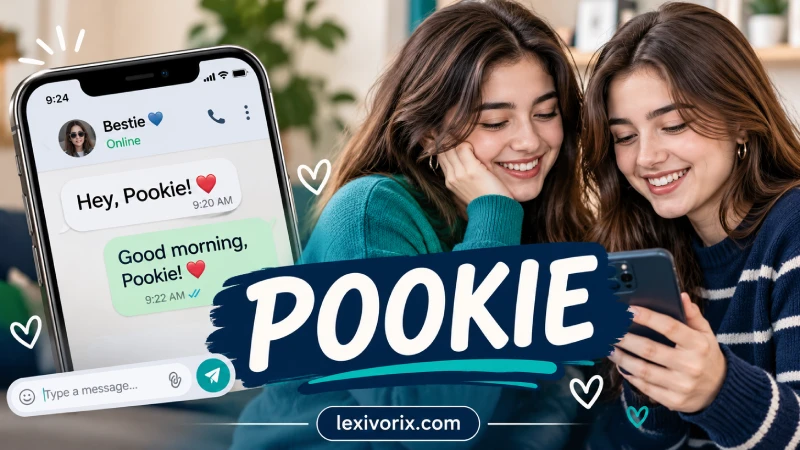
You might see someone write “Hey, pookie!” in a text message or social media comment. Perhaps a friend uses it as a nickname, or someone calls their favorite person “my pookie.” The word sounds playful, but its meaning can depend on the relationship.
So, what does pookie mean? In everyday slang, pookie is an affectionate nickname for someone a person cares about. It is similar to calling someone honey, sweetheart, sweetie, or cutie. People use it for romantic partners, close friends, family members, children, and pets.
The nickname can sound loving, funny, or teasing. It does not always suggest romantic interest. In addition, social media has helped bring the word into more everyday conversations.
This guide explains its meaning, pronunciation, history, and common uses. You’ll also find realistic examples for texts, friendships, and online conversations.
Quick Answer
Pookie is an affectionate nickname for someone special, lovable, or dear to you. People use it for partners, friends, family members, and pets.
TL;DR
- Pookie is a sweet, informal nickname.
- It expresses affection, fondness, or closeness.
- Couples and close friends both use it.
- It appears in texts and social media.
- It is not an acronym or abbreviation.
- Its exact historical origin remains uncertain.
What Does Pookie Mean?
Pookie means someone you care about or find especially lovable. It is a casual term of endearment rather than a formal name or title.
People often use it to make a conversation sound warmer. For example, a friend might write, “Good morning, pookie!” instead of using someone’s regular name.
The nickname can also express playful affection. Someone might call a close friend pookie after a funny conversation or a kind gesture.
The Meaning in Plain English
In simple English, pookie means a person who is special, dear, or loved.
It works much like familiar nicknames such as honey or sweetheart. However, pookie often sounds more playful and cute.
Consider these examples:
- “You’re my favorite pookie.”
- “Good night, pookie!”
- “How are you doing, pookie?”
- “My little pookie is so adorable.”
- “Thanks for helping me, pookie.”
Each example uses pookie to express warmth or affection. The speaker does not use it as a person’s official name.
Is Pookie a Name or a Nickname?
Pookie can appear as a personal nickname or an affectionate way to address someone. People may use it regularly for one person, just like a familiar pet name.
For example, a family might call a child Pookie at home. Friends might also give each other the nickname as an inside joke.
However, most modern slang explanations focus on its role as a term of endearment. It is not usually a person’s formal name.
Is Pookie an Acronym?
No. Pookie is not an acronym or an abbreviation.
It does not have a standard full form. Instead, it is a nickname that people use to show affection.
For example, “Hey, pookie!” is already a complete expression. You do not need to expand the word into separate letters.
This distinction matters because some texting expressions represent longer phrases. Pookie works differently: it is simply an affectionate name.
What Does Pookie Mean in Slang?
In slang, pookie usually means someone a person likes, loves, or finds adorable. It is an informal expression of affection.
People may use it sincerely or jokingly. For instance, someone might call a close friend pookie after receiving a funny message.
The word can also make an ordinary sentence sound sweeter. Compare these examples:
- “Are you coming today?”
- “Are you coming today, pookie?”
The second sentence sounds more affectionate. However, the exact feeling depends on the relationship between the speakers.
Pookie as a Sweet Nickname
People often use pookie when they want to sound caring or friendly.
For example:
- “You did a great job, pookie.”
- “Don’t forget your lunch, pookie.”
- “Hope you have a wonderful day, pookie.”
- “You’re such a lovely person, pookie.”
These examples show warmth and appreciation. They do not require a romantic relationship.
Pookie as a Playful Expression
Sometimes, friends use pookie to make ordinary conversations funnier. The nickname may sound exaggerated or intentionally cute.
For example:
Alex: “I finished the whole assignment.”
Jordan: “Look at you, pookie!”
Jordan is congratulating Alex in a playful way. The nickname makes the response sound friendly and humorous.
Similarly, someone might write:
“Okay, pookie, I see you showing off!”
This sentence sounds teasing rather than serious. The meaning depends on the friendship and the speaker’s tone.
Does Pookie Always Express Love?
Not necessarily. Pookie usually expresses affection, but affection can take different forms.
A person may use it because they feel close to someone. Another person may use it as a joke or a casual nickname.
Therefore, the word alone cannot explain the full relationship. Consider the rest of the conversation and how the person normally communicates.
What Does Pookie Mean in Text Messages?
In text messages, pookie is an affectionate way to address someone. It can make a greeting, compliment, or ordinary reply sound more personal.
People use it in regular phone messages, private chats, and social media direct messages. The nickname can appear at the beginning or end of a sentence.
Common Text Message Examples
Here are examples of how people use pookie in everyday messages.
A friendly greeting
“Hey, pookie! How was your day?”
Meaning: The sender is greeting someone warmly.
A morning message
“Good morning, pookie. Hope you have a great day!”
Meaning: The sender wants to share a kind greeting.
A supportive message
“Don’t worry, pookie. You’ve got this!”
Meaning: The sender is offering encouragement.
A playful reply
“Okay, pookie, whatever you say!”
Meaning: The sender may be teasing someone in a friendly way.
A thank-you message
“Thanks for helping me, pookie!”
Meaning: The sender is showing appreciation and affection.
Example Conversation Between Friends
Mia: “I finally finished my science project.”
Taylor: “That’s amazing, pookie! You worked hard.”
Mia: “Thank you! I’m so relieved.”
Here, pookie adds warmth to a friendly exchange. It does not automatically suggest romantic feelings.
Example Conversation About a Pet
Chris: “Look at my dog sleeping on the couch.”
Riley: “Aww, your little pookie is adorable!”
Here, pookie refers to a beloved pet. The speaker uses it as a cute nickname.
Does Pookie Change the Meaning of a Message?
The nickname adds affection, but it does not completely change the sentence.
For example, “Are you okay?” asks about someone’s well-being. “Are you okay, pookie?” asks the same question in a warmer way.
Likewise, “Good job!” expresses praise. “Good job, pookie!” adds a friendly or affectionate tone.
This small change can make a message feel more personal. Still, the relationship between the people matters.
What Does Pookie Mean on TikTok and Social Media?
On TikTok and other social platforms, pookie often appears as a playful nickname for someone people admire or care about.
Users may write it in captions, comments, video descriptions, and replies. They might use it for friends, partners, creators, pets, or someone they find adorable.
For example, a person might comment, “That’s my pookie!” under a funny video. The comment expresses fondness or playful admiration.
Pookie in TikTok Comments
People often use pookie as a short, affectionate reaction.
Examples include:
- “My pookie is back!”
- “You’re so cute, pookie.”
- “Protect this pookie at all costs.”
- “That’s our favorite pookie.”
- “Pookie deserves all the support.”
These comments can sound sincere or humorous. Sometimes, users exaggerate their affection to make a comment more entertaining.
Pookie in Instagram Captions
On Instagram, pookie may appear in captions, stories, and comments.
For example:
- “Weekend with my pookie.”
- “Happy birthday to my favorite pookie.”
- “My little pookie makes every day better.”
- “A perfect day with the pookie crew.”
The nickname helps create a warm, friendly tone. It can refer to a close friend, family member, partner, or pet.
Pookie in Group Chats
Friends may also use pookie as a shared nickname in group conversations.
For example:
Sam: “Who wants to get pizza after school?”
Jordan: “I’m in!”
Riley: “Anything for my pookie group.”
Here, Riley uses pookie humorously to describe the group. The word adds a playful sense of closeness.
Why Does Pookie Appear in Memes?
The nickname has a naturally cute and playful sound. That makes it easy to use in jokes, captions, and reaction posts.
Some memes exaggerate how much someone loves their favorite person or pet. Others joke about friends calling each other pookie.
For example, a meme might show a surprised person with the caption, “When your best friend finally calls you pookie.”
The humor comes from treating a simple nickname as a special moment. The word itself remains an affectionate expression.
Is Pookie a Romantic Nickname?
Yes, pookie can be a romantic nickname. Couples may use it to express affection, closeness, and fondness.
It works much like sweetheart, honey, or babe. However, pookie often sounds more playful or cute.
For example:
- “Good morning, pookie.”
- “I saved you a seat, pookie.”
- “Have a wonderful day, my pookie.”
- “You’re my favorite person, pookie.”
These examples show affectionate language between people who share a close relationship.
Does Calling Someone Pookie Mean They Like You?
Not always. Someone might call you pookie because they feel comfortable around you or enjoy using cute nicknames.
Close friends also use affectionate names. In addition, some people use pookie casually without intending a romantic message.
Therefore, one nickname cannot confirm someone’s feelings. Look at the wider conversation and how they treat you.
For example, a friend might call several people pookie. That suggests they use it as a general friendly nickname.
On the other hand, someone may use it only with a person they feel especially close to. Even then, the nickname alone does not prove romantic interest.
Can Pookie Sound Too Personal?
Yes. Some people enjoy affectionate nicknames, while others prefer their regular names.
If someone does not like being called pookie, respect that preference. A nickname should make the conversation comfortable for both people.
Also, avoid using it with strangers or people you barely know. It may sound overly familiar when the relationship does not support that level of friendliness.
Can You Call a Friend Pookie?
Yes. Pookie is not limited to romantic partners.
Close friends sometimes use it as a caring nickname or a playful joke. They may use it during group chats, everyday conversations, or funny social media exchanges.
For example:
- “What’s up, pookie?”
- “You made it, pookie!”
- “Thanks for saving me a seat, pookie.”
- “See you tomorrow, pookie.”
- “Don’t forget your homework, pookie.”
These examples show friendly affection. They do not require a romantic connection.
Pookie Between Best Friends
Best friends may develop personal nicknames over time. Pookie can become one of those names.
For example, two friends might call each other pookie because they enjoy joking around. The nickname may become part of their everyday conversations.
They might also use it after a funny moment.
Mia: “I brought snacks for everyone.”
Taylor: “You’re the best, pookie!”
Here, Taylor is showing appreciation. The word makes the response sound warm and playful.
Can You Call a Group of Friends Pookie?
Yes, but the wording may sound more playful than personal.
For example:
“Good morning, my pookies!”
Someone might use this greeting in a group chat. It expresses affection toward several friends at once.
Another example:
“Missed you all, pookies!”
The speaker uses the nickname to address the entire group.
When Should You Avoid Calling a Friend Pookie?
Consider the other person’s comfort and your relationship.
Some friends enjoy cute nicknames. Others may find them embarrassing or overly familiar.
Avoid using pookie if someone asks you to stop. Also, choose a more neutral greeting when speaking with new classmates or people you do not know well.
A simple “Hey!” or using their name may feel more natural.
What Does My Pookie Mean?
My pookie is an affectionate phrase for someone the speaker considers special or dear.
The word my makes the nickname sound more personal. However, it does not automatically mean the speaker is describing a romantic partner.
People use “my pookie” for close friends, family members, partners, and pets.
Examples include:
- “That’s my pookie!”
- “I miss my pookie.”
- “My pookie is having a great day.”
- “Look at my little pookie.”
- “My pookie always makes me laugh.”
The meaning depends on who the speaker is talking about.
What Does It Mean When Someone Calls You My Pookie?
It usually means they feel affection or fondness toward you. They may consider you a close friend or someone special.
However, the nickname does not tell you exactly how they feel. Some people use it with many friends, while others reserve it for a smaller circle.
Consider the situation before interpreting it. A playful comment under a video may carry a different meaning from a personal message.
Is My Pookie Different From Pookie?
The main meaning stays the same. The word my simply makes the nickname sound more personal.
Compare:
- “Hey, pookie!” — A friendly or affectionate greeting.
- “You’re my pookie.” — A more personal expression of fondness.
- “My pookie is here.” — Refers to someone the speaker cares about.
Both forms express affection. Neither one automatically confirms a romantic relationship.
What Does Pookie Bear Mean?
Pookie bear is an extended affectionate nickname. It combines pookie with bear to create an even sweeter or more playful name.
People may use it for a partner, close friend, child, or pet. The expression often sounds cute and familiar.
Examples include:
- “Good morning, pookie bear!”
- “Come here, pookie bear.”
- “My little pookie bear is so cute.”
- “Have a lovely day, pookie bear.”
The word bear does not usually refer to an actual animal in these expressions. Instead, it adds a playful feeling to the nickname.
Why Do People Add Bear to Pookie?
People often combine affectionate words to create personal nicknames. These combinations can sound funny, sweet, or unique.
For example, someone might use pookie bear instead of pookie. Another person might prefer a shorter version.
There is no fixed rule. The best nickname is simply one that feels comfortable to the people using it.
Does Pookie Bear Have a Different Meaning?
Usually, no. It carries the same basic affectionate meaning as pookie.
The added word bear makes the expression sound more playful. It does not create a completely separate slang definition.
Where Did the Word Pookie Come From?
The exact origin of pookie as an affectionate nickname is uncertain.
The word has appeared as a name and nickname before its recent social-media popularity. It later became familiar in everyday American expressions of affection.
Some accounts suggest possible connections to older nickname traditions or words from other languages. However, the available historical evidence does not establish one explanation as certain.
Was Pookie Invented on TikTok?
No. Pookie existed before TikTok became popular.
Social media helped bring wider attention to the nickname. However, it did not create the word.
People used pookie as an affectionate name long before recent online trends. TikTok and other platforms simply gave it more visibility.
How Did Pookie Become Popular Online?
Online creators and users helped spread the nickname through videos, captions, and comments.
One widely discussed example involved a couple’s videos. The husband used pookie as an affectionate name for his wife, helping bring attention to the expression.
Other users adopted the nickname for their friends, partners, and favorite creators. It also appeared in memes and playful comments.
As a result, pookie became familiar in a wider range of online conversations.
Is There One Confirmed Origin Story?
No single origin story is firmly established by the sources reviewed.
Some explanations suggest older linguistic roots. Others focus on the history of pet names and affectionate nicknames.
The safest explanation is that pookie developed as an affectionate nickname and gained renewed visibility through online communities. Avoid treating one proposed origin as proven fact.
How Do You Pronounce Pookie?
Pookie is commonly pronounced POO-kee.
It has two syllables:
- POO — the first syllable receives the main stress.
- kee — the second syllable sounds like the word “key.”
Say it slowly: POO-kee.
Then try using it naturally in a sentence:
“Good morning, pookie!”
The pronunciation is simple for most English speakers. However, beginners may find it helpful to practice the two syllables separately.
Is Pookie Difficult to Spell?
The spelling is usually straightforward: P-O-O-K-I-E.
Remember the double letter O in the middle. The word ends with the letters I-E.
Because pookie is an informal nickname, you may see people capitalize it when using it like a personal name. Lowercase spelling also appears frequently in ordinary messages.
Is Pookie a Noun or a Nickname?
Pookie is generally used as a noun when it refers to a person or a nickname.
It can also function as a form of direct address. That means someone uses it when speaking directly to another person.
For example:
“Pookie, are you ready?”
Here, the speaker uses pookie to address someone.
Pookie as a Noun
A noun names a person, place, thing, or idea. Pookie can name or refer to someone through an affectionate nickname.
Examples:
- “My pookie is coming over.”
- “I bought a gift for my pookie.”
- “Everyone loves that little pookie.”
- “The puppy is our family pookie.”
In these sentences, pookie refers to a person or pet.
Pookie as a Direct Form of Address
People can also use pookie when speaking to someone.
Examples:
- “How are you, pookie?”
- “Listen, pookie, I have an idea.”
- “Good luck today, pookie!”
- “Take care, pookie.”
The word helps create a friendly or affectionate tone.
Is Pookie an Adjective?
In ordinary use, pookie is mainly a noun or nickname rather than a standard adjective.
People may use it creatively in casual online language. However, beginners should understand its main role as an affectionate name.
For example, “That’s my pookie” is a natural nickname use. You do not need to treat pookie as a general descriptive adjective.
How to Use Pookie in a Sentence
Pookie works best in informal conversations with people who are comfortable with affectionate nicknames.
You can use it in greetings, compliments, supportive messages, and playful replies. The key is choosing a situation where the nickname feels natural.
Using Pookie in Greetings
Pookie can make a simple greeting sound warmer.
Examples:
- “Hey, pookie! How are you?”
- “Good morning, pookie.”
- “What’s up, pookie?”
- “Welcome back, pookie!”
- “Have a great day, pookie.”
These sentences work in friendly or affectionate conversations.
Using Pookie in Compliments
People may add pookie when praising someone.
Examples:
- “You did amazing, pookie!”
- “That’s a beautiful drawing, pookie.”
- “You’re so thoughtful, pookie.”
- “Great work today, pookie!”
The nickname adds warmth to the compliment. It does not change the main message.
Using Pookie in Supportive Messages
Pookie can also appear in encouraging messages.
Examples:
- “You’ve got this, pookie!”
- “Don’t give up, pookie.”
- “Take your time, pookie.”
- “I’m proud of your hard work, pookie.”
These messages sound caring and friendly. They can help make encouragement feel more personal.
Common Mistakes When Using Pookie
Mistake: Thinking pookie always means boyfriend or girlfriend.
Correction: Friends, family members, and pet owners can also use it.
Mistake: Assuming pookie is an abbreviation.
Correction: It is a nickname, not an acronym with a standard full form.
Mistake: Thinking TikTok invented the word.
Correction: The nickname existed before its recent online popularity.
Mistake: Assuming every person likes the nickname.
Correction: Some people prefer their regular names. Respect their choice.
Mistake: Using pookie in every conversation.
Correction: It works best when the relationship and situation make affectionate language appropriate.
Synonyms and Related Nicknames
Several English nicknames have meanings close to pookie. They express affection, fondness, or closeness.
However, each nickname has its own tone. Some sound more romantic, while others work well between friends or family members.
Sweetheart
Sweetheart is a familiar term of endearment. People use it to express affection toward someone they care about.
Example:
“Thank you for helping me, sweetheart.”
It can sound loving, caring, or friendly depending on the situation.
Honey
Honey is a common affectionate nickname. People use it for partners, children, and sometimes close friends.
Example:
“Good morning, honey!”
It is a familiar alternative to pookie.
Sweetie
Sweetie is a gentle nickname that often sounds caring.
Example:
“Take care, sweetie.”
People may use it with family members, friends, or someone they love.
Cutie
Cutie describes someone or something adorable.
Example:
“Look at that little cutie!”
It can work as a nickname, but it focuses more on being cute or adorable.
Darling
Darling is a traditional term of endearment. It often sounds warm and affectionate.
Example:
“Have a wonderful day, darling.”
Its tone may sound more traditional than pookie.
Other Related Nicknames
| Nickname | General meaning | Common tone |
|---|---|---|
| Pookie | Someone dear or lovable | Playful and affectionate |
| Sweetheart | Someone special | Warm and caring |
| Honey | Someone loved or valued | Familiar and affectionate |
| Sweetie | Someone dear | Gentle and friendly |
| Cutie | Someone adorable | Playful |
| Darling | Someone cherished | Affectionate and traditional |
These words are close in meaning, but they are not perfect replacements in every conversation.
Does Pookie Have an Antonym?
Pookie does not have a direct antonym because it is a nickname rather than a word describing a measurable quality.
You can use neutral terms instead when you do not want to express affection. For example, use someone’s name or say “friend,” “classmate,” or “person.”
The right choice depends on the conversation. There is no single opposite word for pookie.
Frequently Asked Questions
What Does Pookie Mean in Slang?
Pookie is an affectionate nickname for someone a person cares about. It usually expresses fondness, warmth, or playful closeness.
What Does Pookie Mean in Text Messages?
In texts, pookie is a sweet way to address someone. People use it in greetings, compliments, supportive messages, and friendly conversations.
What Does Pookie Mean on TikTok?
On TikTok, pookie is commonly used as a cute nickname for someone admired or loved. It appears in captions, comments, videos, and playful memes.
Is Pookie a Romantic Nickname?
Yes, couples may use pookie as a romantic nickname. However, friends and family members also use it, so it does not always suggest romance.
Can You Call Your Best Friend Pookie?
Yes, close friends can call each other pookie. It often works as a playful nickname that expresses friendship and affection.
What Does My Pookie Mean?
“My pookie” means someone special or dear to the speaker. It can refer to a friend, partner, family member, or pet.
Is Pookie a Real Word?
Pookie is an established nickname and informal expression. It appears in online slang references and discussions of everyday affectionate language.
Mini Quiz: Test Your Understanding
Choose the best answer for each question.
Question One: What does pookie usually mean?
A. A formal job title
B. An affectionate nickname
C. A type of food
Question Two: Can friends call each other pookie?
A. Yes
B. No
C. Only online
Question Three: Is pookie an acronym?
A. Yes
B. No
C. It depends on the sentence
Question Four: What does “my pookie” usually refer to?
A. Someone special or dear
B. A school assignment
C. A place to visit
Question Five: Which word is a close synonym for pookie?
A. Sweetheart
B. Stranger
C. Neighbor
Answer Key
- One: B — Pookie is an affectionate nickname.
- Two: A — Close friends can use it.
- Three: B — It is a nickname, not an acronym.
- Four: A — It refers to someone the speaker cares about.
- Five: A — Sweetheart is another term of endearment.
Conclusion
Pookie is a sweet, informal nickname for someone special or lovable. People use it for partners, friends, family members, and pets.
You may see it in texts, comments, and social media captions. Remember that context determines its tone, so use it when the other person feels comfortable with affectionate nicknames.