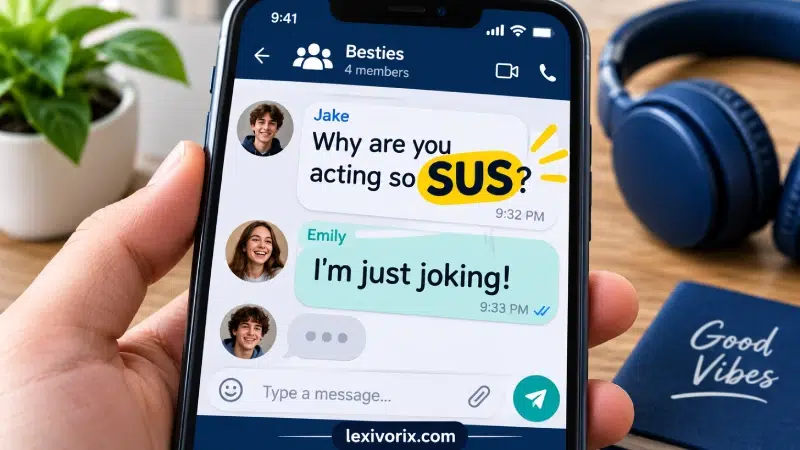
Have you ever received a message saying, “That’s sus”? Maybe someone commented “sus” under a TikTok video or questioned a friend’s unusual behavior. If you didn’t recognize the expression, understanding the conversation might have been difficult.
Sus is a popular informal English slang word. People use it when something seems suspicious, strange, questionable, or difficult to trust. It appears in text messages, social media comments, gaming conversations, and everyday discussions.
You might hear friends use it jokingly when someone gives an unusual excuse. However, the same word can express genuine doubt in serious situations. Its meaning depends on the conversation and the speaker’s tone.
Understanding sus helps you follow modern internet conversations. This guide explains its definition, pronunciation, history, grammatical role, and everyday usage. You’ll also find practical examples and learn when using it might sound inappropriate.
Quick Answer
What does sus mean? Sus means suspicious or suspect. It describes a person, action, explanation, or situation that seems strange, questionable, or untrustworthy.
For example:
“He’s acting sus today.”
This means his behavior seems unusual or suspicious.
TL;DR
- Sus means suspicious or suspect.
- It describes questionable behavior or situations.
- It is informal internet slang.
- People use it in texting and social media.
- Among Us helped popularize its modern internet use.
- It can sound playful or accusatory.
What Does Sus Mean?
Sus is a shortened slang form associated with the words suspicious and suspect. It describes something that makes a person question what is happening.
When someone calls a situation sus, they mean something feels unusual or does not seem right.
For example:
“Your story sounds sus.”
This means the speaker doubts the story or finds something questionable about it.
Another example:
“Why did he suddenly leave when the teacher arrived? That’s sus.”
Here, the speaker thinks the person’s behavior seems unusual.
Sus does not automatically mean someone has lied or done something wrong. It simply communicates doubt or suspicion.
The expression can describe several things:
- A person’s unusual behavior.
- An explanation that seems unbelievable.
- A suspicious message or online account.
- A strange situation.
- A decision that raises questions.
- Something that appears dishonest or misleading.
The word is flexible because it can describe almost anything that seems questionable.
Sus Definition in Plain English
In simple English, sus means something seems off.
Imagine your friend tells you they finished their homework. However, they cannot explain what the assignment was about.
You might jokingly respond:
“That’s a little sus.”
You are suggesting that their explanation seems questionable.
Here are some other simple examples:
- “That website looks sus.” The website seems untrustworthy.
- “His excuse is sus.” His explanation sounds questionable.
- “You’re acting sus.” Your behavior seems unusual.
- “This deal seems sus.” Something about the offer raises doubts.
- “That message looks sus.” The message appears suspicious.
Sus is often used when someone notices something unusual but does not have enough information to prove anything.
Does Sus Always Mean Someone Is Lying?
No. Sus does not automatically mean someone is lying.
It expresses suspicion, doubt, or uncertainty. Sometimes the speaker has a genuine reason for questioning something. Other times, they are simply joking.
For example:
“She said she ate my last cookie. That’s sus.”
This could be playful teasing between friends.
However:
“This email asking for my password looks sus.”
This expresses a more serious concern about an untrustworthy message.
The surrounding situation helps explain the intended meaning.
What Does Sus Mean in Texting?
In texting, sus is a quick way to describe something suspicious, questionable, or strange.
Friends often use it when reacting to unusual behavior, confusing explanations, unexpected messages, or funny situations.
It saves time because people can communicate doubt with one short word.
Everyday Texting Examples
Here are realistic conversations showing how people use sus.
Example: A suspicious excuse
Alex
He said he didn’t eat the pizza.
Jordan
But he was the only one at home 😂
Alex
That’s sus!
Meaning: The explanation seems questionable.
Example: A strange message
Taylor
This random account wants my personal information.
Morgan
That sounds sus. Be careful.
Meaning: The account seems suspicious or untrustworthy.
Example: Friendly teasing
Sam
I definitely didn’t eat your fries.
Chris
You’re looking kinda sus 👀
Meaning: Chris is jokingly questioning Sam’s statement.
Common Sus Expressions in Text Messages
You may encounter these phrases in everyday chats:
- “That’s sus.”
- “You’re acting sus.”
- “Something feels sus.”
- “That sounds kinda sus.”
- “Why is everyone being sus?”
- “I’m getting sus vibes.”
- “This whole situation is sus.”
- “Bro, that’s actually sus.”
Each expression communicates suspicion or doubt.
The word can also appear with informal intensifiers such as “really,” “kinda,” and “very.”
For example, “That’s really sus” expresses stronger suspicion than simply saying “That’s sus.”
What Does “You’re Sus” Mean?
When someone says “you’re sus,” they think your behavior seems suspicious or unusual.
The phrase can be playful between friends or more serious during an argument.
For example:
- Person A: “Why did you suddenly close your laptop?”
- Person B: “I was just checking something.”
- Person A: “Hmm, you’re sus.”
- The speaker is jokingly suggesting that the explanation seems questionable.
However, if someone says it during a serious disagreement, it might sound like an accusation.
What Does Sus Mean on Social Media?
On social media, sus describes questionable behavior, suspicious content, unusual situations, or things that seem dishonest.
People use it in comments, captions, direct messages, and reactions to videos.
The basic meaning remains the same across platforms. However, the tone can change depending on the conversation.
Sus Meaning on Snapchat
On Snapchat, people commonly use sus when reacting to unusual messages, stories, pictures, or behavior.
For example:
- “Why did you delete that snap? Sus.”
- “Your story is looking kinda sus.”
- “That account seems sus.”
- “You’re acting sus today 😂.”
Imagine someone posts a picture suggesting they are studying. Their friend notices they are actually at a movie theater.
The friend might reply:
“Wait, weren’t you studying? That’s sus!”
The message suggests that something about the situation does not make sense.
Sus Meaning on TikTok
On TikTok, sus frequently appears in video comments, captions, memes, and reactions.
People use it when a video shows strange behavior or an unexpected situation.
Examples:
- “Bro is acting sus.”
- “This video is kinda sus.”
- “Something about that explanation feels sus.”
- “The ending was actually sus.”
For example, imagine a video showing someone quickly hiding a phone when another person enters the room.
A viewer might comment:
“That reaction is sus 👀.”
The comment suggests that the behavior looks questionable.
Sus Meaning on Instagram
Instagram users may write sus under posts, Reels, comments, and stories.
It can describe suspicious captions, unusual behavior, or questionable claims.
Examples:
- “That caption sounds sus.”
- “This account looks sus.”
- “Your explanation is kinda sus.”
- “Something about this post feels sus.”
The word is particularly useful in casual conversations where people want to express doubt quickly.
Does Sus Mean Something Different on Each Platform?
No. The basic meaning does not change between Snapchat, TikTok, and Instagram.
It still means suspicious, suspect, or questionable.
What changes is the situation in which someone uses it. A funny video might receive a playful sus comment. A questionable online account might receive a more serious one.
What Does Sus Mean in Among Us?
Among Us helped bring sus into mainstream internet conversations. The word became especially recognizable through the game’s discussions about suspicious players.
In Among Us players work together while trying to identify hidden impostors.
Players use sus when they believe someone might be the impostor.
For example:
“Blue is sus. He was near the emergency meeting.”
This means the speaker suspects the blue player.
Other gaming examples include:
- “Red looks sus.”
- “I think Green is sus.”
- “Why was Yellow following me? That’s sus.”
- “Someone is acting really sus.”
- “Blue’s explanation sounds sus.”
Why Did Among Us Make Sus Popular?
The game created a setting where players constantly questioned each other’s actions.
Players needed a quick way to express suspicion during discussions. Sus became a convenient word for accusing someone of suspicious behavior.
Its use spread through gaming conversations, memes, videos, and social media.
However, sus existed before Among Us became popular. The game helped introduce it to a much wider online audience rather than creating the word.
How to Use Sus in a Sentence
Sus is easy to use in casual English. It generally works as an adjective describing a person, action, explanation, object, or situation.
You can place it after linking verbs such as “is,” “looks,” “seems,” and “sounds.”
Using Sus to Describe a Person
Use sus when someone’s behavior makes you question their intentions.
Examples:
- “He’s acting sus today.”
- “Why is your friend being so sus?”
- “That guy seems kinda sus.”
- “You’re looking suspiciously sus right now.”
The examples communicate doubt about someone’s behavior.
Using Sus to Describe an Explanation
You can use sus when a person’s story does not sound believable.
Examples:
- “Your excuse sounds sus.”
- “That explanation is really sus.”
- “Something about his answer feels sus.”
- “Her story seems a little sus.”
These sentences suggest that the speaker has doubts.
Using Sus to Describe an Object or Situation
Sus does not only describe people. It can also describe objects, offers, messages, and situations.
Examples:
- “That website looks sus.”
- “This advertisement seems sus.”
- “The deal sounds too good to be true. It’s sus.”
- “That unexpected email is pretty sus.”
- “Something about this situation feels sus.”
The word is useful whenever something seems questionable.
Using Sus Before a Noun
You can also place sus before a noun.
Examples:
- “That was a sus decision.”
- “He gave me a sus explanation.”
- “I received a sus message.”
- “They shared a sus link.”
In these examples, sus describes the noun that follows it.
Natural Sentence Patterns
These common sentence patterns can help beginners use the word correctly.
| Sentence pattern | Example |
|---|---|
| Subject + is + sus | “This account is sus.” |
| Subject + seems + sus | “His explanation seems sus.” |
| Subject + sounds + sus | “That excuse sounds sus.” |
| Sus + noun | “That’s a sus website.” |
| Subject + acts + sus | “He’s acting sus.” |
The most important point is to use sus as a description, not as a replacement for every form of suspicious.
Common Situations Where People Use Sus
Sus appears in many everyday situations. It is not limited to gaming or social media.
Understanding these situations helps you recognize the word naturally.
Among Friends
Friends often use sus to tease each other about unusual behavior.
For example:
“You’re suddenly being nice. That’s sus!”
The speaker is jokingly questioning the person’s behavior.
Another example:
“You said you weren’t hungry, but you ate my sandwich. Sus!”
This is a playful reaction to something unexpected.
At School
Students may use sus when discussing confusing situations or questionable explanations.
For example:
- “His excuse for missing class sounds sus.”
- “That answer looks a little sus.”
- “Why did everyone suddenly stop talking? That’s sus.”
These examples reflect informal conversations between classmates.
The expression is not usually appropriate for formal school assignments.
Online Shopping
People sometimes use sus when discussing unfamiliar websites or questionable offers.
For example:
“That store is offering an expensive laptop for almost nothing. Seems sus.”
Here, sus means the offer raises concerns.
It is important to remember that slang alone does not establish whether something is trustworthy. Check important claims carefully rather than relying on a casual label.
Social Relationships
Sus can describe behavior that makes someone question another person’s intentions.
For example:
“She keeps changing her story. Something feels sus.”
The speaker has noticed inconsistencies and feels uncertain.
However, calling someone sus does not prove wrongdoing. It only communicates suspicion.
Online Accounts and Messages
People may describe unfamiliar accounts or unexpected messages as sus.
For example:
- “This account has no profile picture. Kinda sus.”
- “That message looks sus.”
- “Why is this account asking for private information? That’s sus.”
In these situations, the word expresses concern about something questionable.
How to Pronounce Sus
Sus is pronounced “suhs.”
SUHS
/sʌs/
American English pronunciationIt rhymes approximately with “bus” and “plus.”
The pronunciation is short and simple.
The first sound is like the beginning of “sun.” The final sound is the same as the ending of “bus.”
Examples:
- “That’s sus.”
- “He’s acting sus.”
- “This situation seems sus.”
Is Sus Pronounced Like a Full Word?
Yes. Unlike abbreviations spoken as separate letters, sus is pronounced as one short word.
You say “suhs,” not the individual names of its letters.
Is Sus Slang or an Abbreviation?
Sus is informal slang. It is a shortened form associated with suspicious and suspect.
People use it in casual speech, text messages, gaming, and social media.
It is not normally considered appropriate for formal documents.
Is Sus an Acronym?
No. Sus is not normally an acronym.
An acronym is formed from initial letters and is generally pronounced as a word. Sus is better described as a shortened form or clipping of a longer word.
It is commonly connected to suspicious and suspect.
For example:
- Suspicious becomes sus.
- “That behavior is suspicious” becomes “That behavior is sus.”
The shortened version makes casual communication quicker.
What Part of Speech Is Sus?
In contemporary American internet slang, sus is primarily an adjective.
An adjective describes a person, place, thing, action, or situation.
For example:
“That website looks sus.”
Here, sus describes the website.
It can appear in several grammatical positions.
After a linking verb:
“His explanation is sus.”
Before a noun:
“That was a sus decision.”
After a verb of appearance:
“Your behavior seems sus.”
The main modern slang use is adjectival. You should not automatically treat sus as a noun or verb in ordinary American internet conversations.
Is Sus a Real English Word?
Yes. Sus is recognized in English dictionaries as an informal slang adjective.
It is not simply a random internet expression. It has an established meaning and appears in modern English communication.
Its informal nature means it is more suitable for casual conversations than formal writing.
Where Did Sus Come From?
Sus is a shortened form associated with the English words suspicious and suspicion.
The word existed before modern social media and gaming became widespread.
Dictionary.com records an earlier use of sus as a shortening of suspicious. Its dictionary entry places that usage in the 1935–1940 period. Dictionary.com+1
How Did Sus Become Popular Online?
Although sus existed earlier, online gaming helped bring it to a much wider audience.
Among Us played an important role in making the expression recognizable to internet users.
During gameplay, players needed to identify suspicious behavior. They began using short comments such as:
- “Red is sus.”
- “Blue looks sus.”
- “That’s suspicious.”
- “I think Green is sus.”
The word spread through gameplay clips, memes, livestreams, and social media discussions.
Eventually, people started using it outside gaming.
Today, someone might call an unusual advertisement, strange explanation, or questionable situation sus without mentioning video games.
Does Sus Come Directly From Among Us?
No. Among Us helped popularize the word, but it did not create it.
The shortened form had an earlier history in English.
This distinction matters because internet culture often makes older words newly recognizable. A word can become popular online without originating on the internet.
Is Sus an Insult or a Bad Word?
Sus is not generally considered a swear word or an offensive term by itself.
However, it can sound insulting depending on how someone uses it.
Calling a friend sus as a joke is different from seriously accusing someone of dishonesty.
When Sus Is Used Playfully
Friends often use sus to make fun of unusual or unexpected behavior.
For example:
Friend A: “I finished all the snacks.”
Friend B: “You said you weren’t hungry. That’s sus!”
The speaker is teasing their friend.
The expression is lighthearted because both people understand the joke.
When Sus Sounds Accusatory
The word can also communicate genuine distrust.
For example:
“Your explanation sounds sus, and I don’t believe it.”
This statement is more serious than friendly teasing.
It suggests that the speaker doubts someone’s honesty.
Can Calling Someone Sus Hurt Their Feelings?
Yes. Even informal slang can upset someone when it questions their honesty or intentions.
The word may sound dismissive during an argument.
Before using it, consider your relationship with the person and the situation.
If you have a genuine concern, explain what seems unusual instead of relying on a vague label.
Sus Synonyms and Related Expressions
Several English words have meanings close to sus. However, they do not all communicate exactly the same idea.
Choosing the right expression depends on what you want to describe.
Suspicious
Suspicious is the closest standard-English equivalent of sus.
It describes something that causes doubt or makes someone question another person’s intentions.
Example:
“His behavior seems suspicious.”
This communicates the same basic idea as “His behavior seems sus.”
Sketchy
Sketchy describes something that appears unsafe, dishonest, unreliable, or questionable.
Example:
“That website looks sketchy.”
It often carries a stronger suggestion of possible risk.
Shady
Shady describes behavior that seems dishonest, secretive, or morally questionable.
Example:
“That business deal sounds shady.”
It can suggest that someone is hiding something.
Questionable
Questionable means something deserves doubt or closer examination.
Example:
“That explanation is questionable.”
This expression is more neutral and works in more formal situations.
Fishy
Fishy describes something that seems suspicious or does not make sense.
Example:
“Something about that story seems fishy.”
It is an informal expression often used in everyday English.
Untrustworthy
Untrustworthy describes someone or something that cannot easily be trusted.
Example:
“That account looks untrustworthy.”
It is more direct than sus.
Is There an Exact Opposite of Sus?
There is no single perfect opposite of sus.
Depending on the sentence, possible contrasting words include:
- Trustworthy.
- Believable.
- Reliable.
- Legitimate.
- Credible.
For example:
“That account looks sus.”
A contrasting statement would be:
“That account looks trustworthy.”
The best opposite depends on whether you are discussing honesty, reliability, or credibility.
When Should You Avoid Using Sus?
Sus works best in casual communication. However, some situations require clearer and more professional language.
Formal Writing
Avoid using sus in academic essays, research papers, and formal assignments.
Instead of:
“The student’s explanation was sus.”
Write:
“The student’s explanation appeared suspicious.”
The second sentence sounds more appropriate for academic writing.
Professional Emails
Professional communication should use clear language.
Instead of:
“That customer request looks sus.”
Write:
“That customer request appears questionable.”
This sounds more respectful and professional.
Serious Accusations
Avoid casually labeling someone sus when discussing a serious concern.
For example, calling someone’s actions sus might create confusion or unnecessary conflict.
Explain what you noticed and why it concerns you.
Conversations With Unfamiliar People
Some people understand internet slang, while others may not.
If you are unsure whether someone understands sus, use suspicious or questionable instead.
Clear language prevents misunderstandings.
Common Mistakes When Using Sus
Although sus is easy to understand, beginners sometimes misunderstand its meaning or use it incorrectly.
Here are some common mistakes worth avoiding.
Thinking Sus Always Means Guilty
Sus expresses suspicion, not proof.
For example:
“His explanation sounds sus.”
This means the explanation raises questions. It does not prove that the person lied.
Better understanding: Sus communicates doubt rather than certainty.
Using Sus as a Synonym for Every Strange Thing
Not everything unusual is suspicious.
A strange outfit, unusual hobby, or unexpected decision might simply be different.
Use sus when something genuinely raises questions or seems questionable.
For example:
“That unusual painting is interesting.”
This is better than calling the painting sus without a reason.
Confusing Sus With Suspiciously
Sus is primarily an adjective, while suspiciously is an adverb.
For example:
- Correct: “He’s acting sus.”
- Correct: “He’s acting suspiciously.”
Both communicate similar ideas, but their grammatical structures differ.
Thinking Sus Is Only a Gaming Word
Sus became widely recognized through gaming culture. However, its everyday use extends beyond video games.
People use it in messages, comments, conversations, and discussions.
You do not need to be a gamer to understand or use it.
Using Sus in Formal Documents
Sus is informal slang.
Using it in professional or academic writing may make your sentence sound too casual.
Choose suspicious, questionable, or untrustworthy when a more formal expression is needed.
Assuming Sus Always Sounds Friendly
The tone depends on the situation.
“You’re sus 😂” might be playful between friends.
“Your actions are sus” might sound like a serious accusation.
Consider the relationship and conversation before using the word.
Frequently Asked Questions About Sus
What Does Sus Mean in Texting?
Sus means suspicious or suspect in text messages. People use it when something seems strange, questionable, or difficult to trust.
For example, “Your excuse sounds sus” means the explanation seems suspicious.
What Does Sus Mean in Slang?
In slang, sus is a shortened form associated with suspicious and suspect. It describes people, behavior, explanations, or situations that raise doubts.
It can sound playful, sarcastic, or serious depending on the context.
What Does Sus Mean on Snapchat?
On Snapchat, sus describes unusual or questionable messages, stories, accounts, and behavior.
For example, “That snap looks sus” means something about the picture or message seems suspicious.
What Does Sus Mean on TikTok?
On TikTok, sus appears in comments, captions, memes, and reactions. People use it when a video or someone’s behavior looks suspicious or unusual.
For example, “Bro is acting sus” suggests that someone’s behavior seems questionable.
What Does Sus Mean in Among Us?
In Among Us, sus describes a player who seems suspicious or might be the impostor.
For example, “Red is sus” means the speaker suspects the red player.
Is Sus Short for Suspicious or Suspect?
Sus is commonly associated with both suspicious and suspect. In everyday American slang, it generally describes something questionable or untrustworthy.
Dictionary definitions support its use as an informal adjective meaning suspicious.
Is Calling Someone Sus an Insult?
Not necessarily. Friends often use sus jokingly when someone behaves unusually.
However, it can sound insulting when used to question someone’s honesty or intentions seriously.
Is Sus a Bad Word?
No. Sus is not generally considered a swear word.
It is informal slang, but its tone can become negative when used as an accusation.
Is Sus Still Used Today?
Yes. Sus remains recognizable in modern internet communication, including texting, gaming, and social media.
People also use it in everyday conversations when something seems questionable.
What Does “That’s Kinda Sus” Mean?
“That’s kinda sus” means something seems slightly suspicious or questionable.
The word “kinda” makes the statement sound less direct or less serious.
For example, “He suddenly changed his story. That’s kinda sus.”
Conclusion
Sus means suspicious or suspect. People commonly use it in texting, gaming, and social media to describe questionable behavior or situations.
Now that you understand what does sus mean, you can recognize its meaning and use it naturally in casual conversations.
Explore more simple English explanations at Lexivorix to understand everyday internet expressions.