Have you ever received a text containing three unfamiliar letters: NGL? You might notice this abbreviation in Instagram comments, TikTok captions, or everyday text messages. People also use it in group chats and online conversations.
NGL is a popular expression that helps people introduce honest thoughts. It can appear before a compliment, a personal admission, or an opinion. Sometimes, it also makes criticism sound less direct.
Understanding this abbreviation makes online conversations easier to follow. You can recognize the sender’s intention without misunderstanding their message. However, its meaning depends partly on the surrounding words.
This guide explains what NGL means, where people use it, and how it works. You’ll also discover practical examples, similar expressions, and situations where using it makes sense.
2. Quick Answer
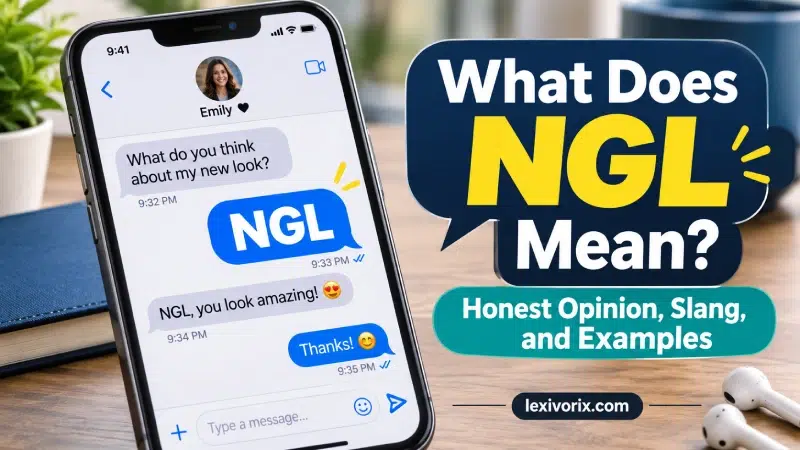
NGL means “not gonna lie.” It is an informal texting abbreviation people use before or after honest opinions, admissions, and personal reactions.
For example, “NGL, that movie was amazing” means “Honestly, that movie was amazing.”
TL;DR
- NGL stands for “not gonna lie.”
- It is common in texting and online conversations.
- People use it to introduce honest opinions.
- It can express positive or negative feelings.
- It is informal, not suitable for formal writing.
- Its tone depends on the surrounding message.
What Does NGL Mean?
NGL is short for “not gonna lie.” People use it when sharing something they genuinely think or feel.
The expression suggests that someone is speaking openly. It can introduce an unexpected opinion, personal confession, or straightforward observation.
For example:
- “NGL, I really enjoyed that concert.”
- “NGL, I was nervous about the interview.”
- “That restaurant was expensive, NGL.”
In these examples, the sender expresses a personal reaction. The abbreviation adds a casual feeling to the message.
Importantly, NGL does not suggest that someone was lying earlier. It simply emphasizes the honesty or directness of their current statement.
What Does NGL Mean in Texting and Slang?
In texting, NGL means “not gonna lie.” It belongs to informal internet language and everyday digital communication.
People use it when messaging friends, posting comments, or sharing personal opinions online.
Here are some common situations:
In text messages:
“ NGL, I’m really excited about Saturday.”
The sender is honestly expressing excitement.
On Instagram:
“NGL, this picture turned out great.”
The person is sharing a positive opinion.
On TikTok:
“NGL, I watched this video five times.”
The creator or commenter admits something openly.
In group chats:
“NGL, I don’t understand today’s homework.”
The sender openly admits having difficulty understanding something.
The meaning stays the same across these situations. Only the subject and emotional tone change.
How to Use NGL in a Sentence
NGL is flexible and can appear in different positions. Its placement depends on how someone wants their message to sound.
At the Beginning
People often place NGL before an honest opinion.
Examples:
- “NGL, this is my favorite restaurant.”
- “NGL, I didn’t expect that result.”
- “NGL, you’re really good at drawing.”
This position prepares the reader for a direct statement.
At the End
NGL can also appear after the main statement.
Examples:
- “That was a difficult exam, NGL.”
- “Your presentation was impressive, NGL.”
- “I’m pretty tired today, NGL.”
Here, it adds an honest afterthought to the message.
In the Middle
Sometimes, NGL appears between two parts of a sentence.
Examples:
- “I was, NGL, surprised by the announcement.”
- “That movie was, NGL, better than expected.”
This placement is less common in everyday texting. However, people may use it for emphasis.
NGL Examples in Everyday Conversations
The easiest way to understand NGL is through realistic conversations. Below are examples showing how people use it naturally.
Example 1: Expressing a Compliment
Person A: Did you like my new haircut?
Person B: NGL, it looks really good!
Meaning: Person B genuinely likes the haircut.
Example 2: Sharing an Opinion
Person A: Have you watched that new movie?
Person B: NGL, I thought it was boring.
Meaning: Person B is honestly sharing a negative opinion.
Example 3: Making a Confession
Person A: Did you finish the assignment?
Person B: NGL, I completely forgot about it.
Meaning: Person B openly admits forgetting the assignment.
Example 4: Expressing Excitement
Person A: Are you ready for the school trip?
Person B: NGL, I’m so excited!
Meaning: Person B genuinely feels excited.
Example 5: Giving Friendly Feedback
Person A: What do you think about my presentation?
Person B: NGL, the introduction could be better.
Meaning: Person B is giving an honest suggestion.
Example 6: Sharing a Personal Feeling
Person A: Did you enjoy the party?
Person B: NGL, I felt a little uncomfortable.
Meaning: Person B is openly explaining their feelings.
These examples show that NGL works with different emotions. It does not automatically indicate criticism or negativity.
What Tone Does NGL Communicate?
NGL can communicate several different tones. The surrounding sentence usually reveals the intended feeling.
Honesty
Someone may use NGL to emphasize a genuine opinion.
Example: “NGL, I really liked your idea.”
Friendly Criticism
It can introduce feedback that might sound uncomfortable.
Example: “NGL, your explanation needs more detail.”
Surprise
People sometimes use it when admitting an unexpected reaction.
Example: “NGL, I didn’t think we would win.”
Humor
NGL can also introduce playful or exaggerated statements.
Example: “NGL, I could eat pizza every single day.”
Sincerity
A person might use it to express genuine appreciation.
Example: “NGL, your support means a lot.”
Important: NGL does not automatically make a statement polite. A harsh comment can still hurt someone’s feelings, even with this abbreviation.
When to Use NGL and When to Avoid It
NGL works best in relaxed conversations. It helps messages sound natural, personal, and conversational.
When to Use NGL
Use NGL when communicating casually with:
- Friends and classmates.
- Family members in informal chats.
- People you know on social media.
- Members of casual online communities.
- People sharing opinions in group conversations.
Examples:
- “NGL, I loved that episode.”
- “NGL, today was exhausting.”
- “NGL, that was a great idea.”
When to Avoid NGL
Avoid this abbreviation in situations that require formal language.
These include:
- School essays and academic assignments.
- Formal business emails.
- Professional reports.
- Official letters and applications.
- Formal presentations.
Instead, use expressions such as “honestly,” “to be honest,” or “in my opinion.”
| Context | Best Choice | Why |
|---|---|---|
| Texting friends | NGL | Natural and casual |
| Social media comments | NGL | Fits informal communication |
| School essays | Honestly | More appropriate |
| Business emails | To be honest | Clearer and more professional |
| Formal reports | In my opinion | Suitable for formal writing |
NGL Pronunciation and Grammar Role
How Do You Pronounce NGL?
NGL is usually pronounced by saying each letter separately:
En-Jee-El
It is not normally pronounced as one complete word.
The original expression, “not gonna lie,” can also be spoken naturally in everyday conversation.
What Part of Speech Is NGL?
NGL is an initialism formed from the first letters of “not gonna lie.”
It is not a traditional noun, verb, or adjective. In sentences, it works as an informal introductory expression or conversational marker.
For example:
“NGL, I forgot my notebook.”
Here, NGL introduces the speaker’s honest admission.
It does not change the grammatical structure of the main sentence. Instead, it provides extra information about the speaker’s attitude.
Similar Expressions and Alternatives
Several English expressions communicate ideas similar to NGL. However, each has slightly different uses and tones.
TBH — To Be Honest
TBH introduces an honest opinion or personal feeling.
Example: “TBH, I didn’t enjoy the movie.”
Honestly
Honestly is a standard English word that emphasizes sincerity.
Example: “Honestly, I think you did a great job.”
Truthfully
Truthfully communicates that someone is speaking sincerely.
Example: “Truthfully, I wasn’t expecting that result.”
FR — For Real
FR expresses agreement, seriousness, or confirmation.
Example: “That was an amazing performance, FR.”
I Can’t Lie
This expression directly communicates an honest admission.
Example: “I can’t lie, that was delicious.”
These expressions are related, but they are not always interchangeable. NGL generally has a more casual texting style.
Common Mistakes When Using NGL
Although NGL is easy to understand, people sometimes misunderstand its purpose.
Mistake 1: Thinking NGL Only Introduces Negative Opinions
Incorrect assumption: NGL is only used before criticism.
Correction: People also use it before compliments, excitement, and positive reactions.
Example: “NGL, your drawing looks amazing.”
Mistake 2: Assuming Someone Was Previously Lying
Incorrect assumption: The sender must have lied before.
Correction: NGL simply emphasizes an honest statement. It does not automatically suggest previous dishonesty.
Mistake 3: Using NGL in Formal Writing
Incorrect: “NGL, the research was interesting.”
Correction: “Honestly, the research was interesting.”
Formal writing generally requires complete, standard expressions.
Mistake 4: Thinking NGL Makes Every Comment Polite
Incorrect assumption: Adding NGL makes criticism harmless.
Correction: The message itself still matters. Respectful wording is important.
Mistake 5: Confusing NGL With a Full Sentence
NGL is an abbreviation, not a complete sentence.
Example: “NGL, I enjoyed the event.”
The complete thought is “I enjoyed the event.” NGL simply introduces the speaker’s attitude.
Frequently Asked Questions
1. What Does NGL Mean in Texting?
NGL means “not gonna lie.” People use it in text messages to introduce honest opinions, feelings, or personal admissions.
2. Is NGL a Slang Word?
Yes. NGL is informal internet and texting slang. It is commonly used in casual digital conversations and social media comments.
3. Is NGL the Same as TBH?
They have similar meanings but slightly different tones. NGL means “not gonna lie,” while TBH means “to be honest.” Both introduce personal opinions or honest statements.
4. Can NGL Be Used Sarcastically?
Yes. Someone can use NGL sarcastically or humorously. The surrounding message helps readers understand the intended tone.
5. Is NGL Rude?
No, NGL is not inherently rude. However, the statement following it might sound harsh or disrespectful. Adding NGL does not automatically make criticism polite.
6. How Do You Pronounce NGL?
Pronounce NGL by saying each letter separately: “En-Jee-El.” People generally do not pronounce it as one word.
7. Can You Use NGL in Formal Writing?
It is better to avoid NGL in formal writing. Use “honestly,” “truthfully,” or “to be honest” instead.
Conclusion
NGL means “not gonna lie” and introduces honest opinions, personal feelings, and casual admissions. It is widely understood in informal texting and online conversations.
Now that you understand what does NGL mean, you can recognize it and use it naturally. Try noticing how people use it in everyday conversations.